Expert views · Apigenin
What Does Andrew Huberman Say About Apigenin?

Nootrovo · Expert views
Apigenin
What Andrew Huberman says, with sources
Photo: Jamesbrianbounds, CC BY-SA 4.0, via Wikimedia Commons.
Andrew Huberman includes apigenin, a compound found in chamomile, in his list of optional sleep supplements. He suggests 50 mg taken 30 to 60 minutes before bed and presents it as something that can support sleepiness rather than a sleeping pill.
The short answer
What apigenin is
Apigenin is a plant compound, a flavonoid, found in chamomile and some other plants. In his sleep episode Huberman described it as a chamomile derivative and said 50 mg can support the onset of sleepiness to help people fall asleep and stay asleep. Source: Master Your Sleep & Be More Alert When Awake.
The dose in his toolkit
His Toolkit for Sleep newsletter lists 50 mg of apigenin as one of the supplements you might consider taking 30 to 60 minutes before bed, alongside magnesium and theanine. He is clear that it is optional: the same list says to start with one supplement or none, and to add others one at a time. He also mentions that on three or four nights a week he takes 2 g of glycine and 100 mg of GABA in addition. Source: Toolkit for Sleep.
Watch: Andrew Huberman on apigenin
How it fits his approach
Huberman frames supplements as the last step, not the first. In his sleep episode he said he would start by getting morning light viewing right, then look at nutrition and activity, and only then consider whether a supplement is worth trying. His toolkit newsletter repeats this: start with one supplement, or none, add one at a time, and work out what suits you, because some people need none and some like one but not another. Sources: Master Your Sleep episode and Toolkit for Sleep.
The rest of the toolkit is behavioural: viewing morning and afternoon sunlight, avoiding bright light late at night, keeping the bedroom cool and dark, limiting naps and avoiding alcohol. For light, he suggests around 10 minutes outside on bright days, 20 minutes when cloudy and 30 to 60 minutes when very overcast, without sunglasses. He also warns that many people feel a natural burst of alertness about an hour before their usual bedtime and says this is normal and will pass. He describes sleep as the foundation of mental and physical health, and says the occasional late night does not matter much as long as the habits hold most of the time. Apigenin sits at the end of that list as an add-on, not a replacement. In the episode he added that sleep supplements can leave some people groggy and slow to wake the next morning, so anyone trying them may need to adjust the amount or stop. He also says everyone should be careful about taking anything and should consult a doctor first. Source: Toolkit for Sleep.
Sourcing and disclosure
Huberman has disclosed that he uses supplements from Momentous, which partners with his podcast, and his newsletter includes a discount link. He also says you can pick another source you like and trust. Apigenin products vary in strength and purity, so checking for third-party testing is sensible whichever brand you choose. Because Huberman's own regime combines several compounds, it is hard to tell from his account which one is doing the work, which is another reason he suggests trying them singly. Source: Toolkit for Sleep.
What the wider evidence says
Direct human trials of isolated apigenin for sleep are scarce. The closest evidence comes from chamomile extract. In a small randomised pilot trial of 34 adults with chronic insomnia, 270 mg of chamomile extract twice daily for 28 days produced no significant differences from placebo in sleep diary measures such as total sleep time or time to fall asleep, although there were modest, non-significant signs of better daytime functioning (Zick et al., 2011).
That does not rule out a benefit, but it means apigenin for sleep rests more on mechanism and anecdote than on firm clinical results. Apigenin may interact with some medicines, and it has not been well studied in pregnancy, so speak to your doctor before taking it.
My take
Personal opinion
My take: Andrew Huberman is worth listening to here because the reasoning is laid out and the sources are public. I would still treat any single expert's stack as a starting point, not a rulebook. If I were adding apigenin to my own routine, I would start with aSquared Nutrition Apigenin 50mg & L-Theanine 200mg, keep to the label dose, and give it six to eight weeks before judging it.
If you take prescription medication, check with your pharmacist first. That is the one step I would never skip.
Shop apigenin

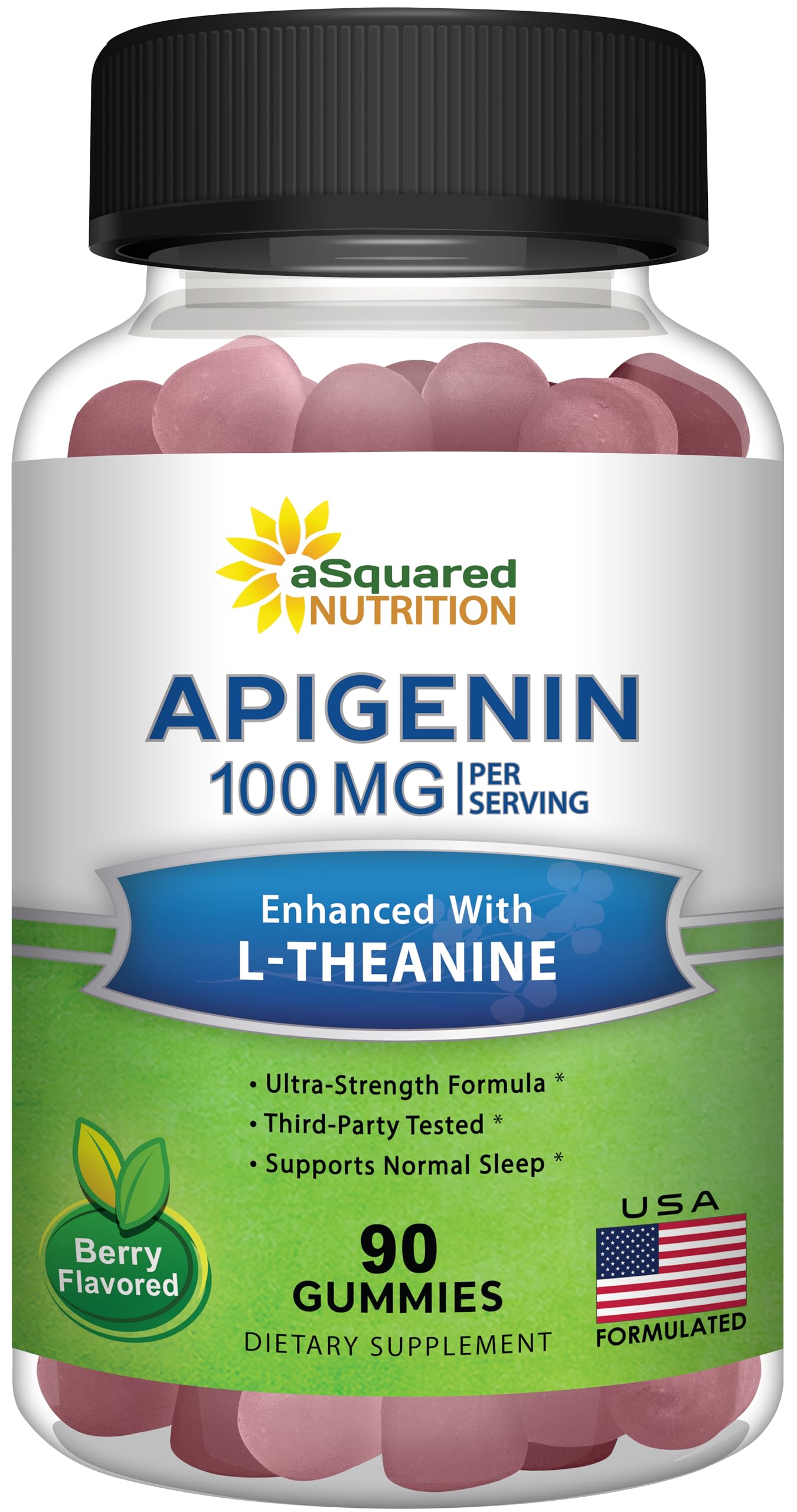
aSquared Nutrition
aSquared Nutrition Apigenin 100mg with L-Theanine 100mg Gummies for Sleep
FAQs
How much apigenin does Andrew Huberman suggest?
His Toolkit for Sleep lists 50 mg, taken 30 to 60 minutes before bed.
Where does apigenin come from?
It is a flavonoid found in chamomile and other plants. Huberman describes it as a chamomile derivative.
Is there strong evidence that apigenin improves sleep?
Not yet. Human trials of isolated apigenin are scarce, and a small chamomile extract trial found no significant change in sleep diary measures.
Sources
This article summarises public statements and is not an endorsement by Andrew Huberman, who has no connection to Nootrovo. It is not medical advice.